The Side of Patong Beach Most Tourists Never See
Some places become simplified by the internet long before people truly understand them. Patong Beach is one of those places. After spending years living, walking, photographing, and observing life around Phuket, I have gradually become more interested in the quieter human atmosphere beneath the surface of heavily commercialised destinations. Patong, despite its reputation, remains one of the most revealing examples of that contrast.
Most People Only Experience the Surface of Patong
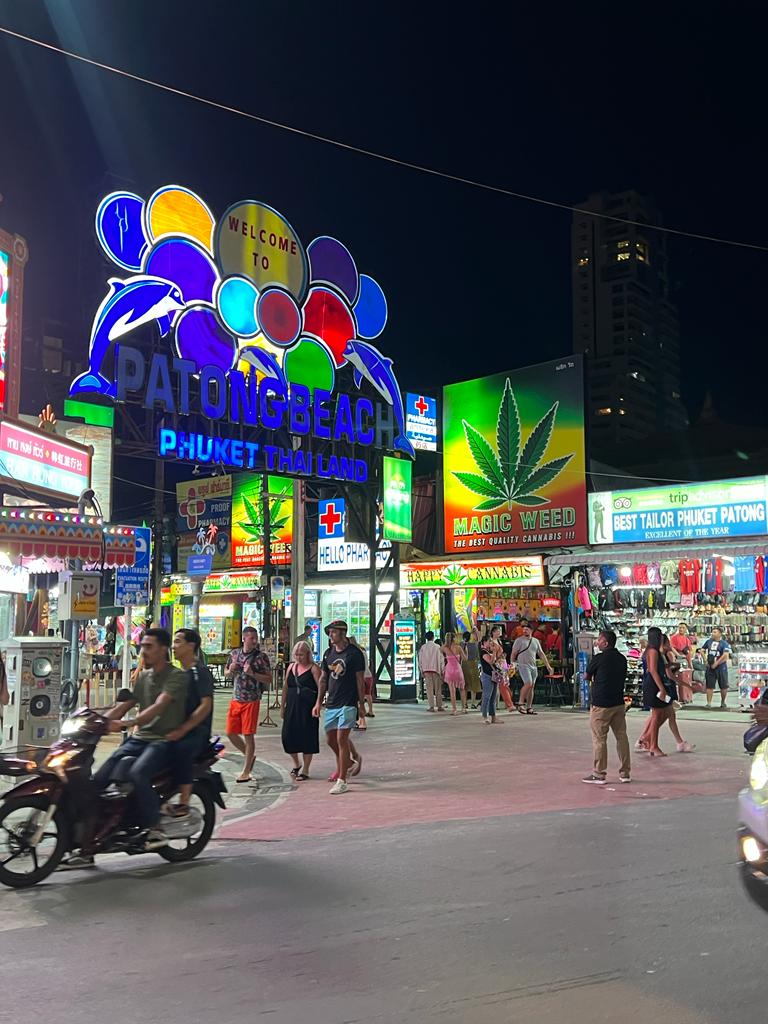
For many visitors, Patong Beach exists as a very compressed experience. A few nights near Bangla Road, crowded streets, loud music, beach clubs, bars, traffic, and the constant movement of tourism. In the age of short-form travel content and social media clips, that version of Patong has become amplified even further. It is often presented as a place of nonstop intensity, somewhere people visit briefly before continuing on to somewhere quieter.
There is truth in that version of Patong. The nightlife is real, the crowds are real, and during peak season the energy of the town can feel relentless. Patong has spent decades adapting itself around tourism, and much of its economy now depends on the movement of visitors constantly arriving and leaving. Hotels expanded, businesses multiplied, roads became busier, and nightlife gradually became one of the defining identities associated with the town internationally.
But places rarely become globally famous without possessing something deeper underneath that popularity in the first place.
Long before Patong became known for nightlife, people were drawn to the bay itself. The beach, the tropical landscape, the surrounding hills, and the feeling of arriving somewhere that once felt distant and undeveloped compared to today. Over time, tourism transformed that quieter version of Patong into something much larger and far more commercially driven, but traces of the original atmosphere still remain beneath the surface.
The problem is not that Patong lost all of its beauty. It is that many people move through the town too quickly to notice the quieter details that still exist around the edges of the noise.
Patong reveals itself differently depending on how you experience it. Someone rushing through nightlife districts for two nights may leave believing the town is chaotic and superficial. Someone walking beach road early in the morning after heavy rain may leave with an entirely different impression. The same streets can feel completely different depending on the hour, the weather, the season, and the mindset of the person walking through them.
Walking through Bangla Road late at night can sometimes feel like moving neck-deep through a rip current, carried forward by noise, music, lights, and crowds whether you intended to move with them or not. Even short scooter rides across town can become strangely chaotic as tourists drift unpredictably through traffic while trying to absorb the energy around them.
Yet some of my strongest memories of Patong are much quieter than that. A morning coffee from the same roadside kiosk. Familiar smiles from vendors setting up for another day before the streets fully wake. The brief stillness after heavy rain when reflections from neon signs remain on empty roads long after the crowds disappear.
That is what makes Patong more complicated than the simplified version that often appears online. Beneath the tourism industry, the nightlife branding, and the crowds, there is still a human rhythm to the place. Small moments of stillness. Ordinary routines. Temporary lives crossing paths for short periods of time before moving on again.
Most people simply never stay long enough to see that side of it.
Patong Is a Place of Transients
One of the things that makes Patong Beach feel different from many other beach towns is the temporary nature of so many lives moving through it at the same time. Very few people seem to stay forever. Tourists arrive for a few days before continuing elsewhere. Seasonal workers come searching for opportunity. Others arrive chasing freedom, reinvention, distraction, curiosity, or simply a different pace of life from the one they left behind.
There is a constant feeling of movement in Patong. People meeting briefly before disappearing back into their own lives again. Conversations that last a single evening. Familiar faces that vanish a few weeks later. The town often feels less like a permanent community and more like thousands of temporary stories overlapping for short periods of time.
I remember meeting an Italian guy and his cousin one evening at a friend’s bar. We had a few drinks, played pool, and spent hours talking about travel, life, and the strange randomness that places like Patong create between strangers. The following night he returned again, this time bringing his entire family. They stayed for hours laughing, eating, drinking, and enjoying the atmosphere together before eventually continuing on with their trip a day later.
It was a simple experience, but also strangely reflective of Patong itself. People arrive from completely different parts of the world, briefly intersect with each other’s lives, and then disappear again almost as quickly as they arrived.
When I first came to Patong, I met a Thai girl working as a bartender. She had travelled from Isaan to work and save money for her family back home. We became friends and spoke often during those first months while she adjusted to the rhythm of Patong life. Then one day, only a few months later, she returned home again. The town had simply become another temporary chapter in her life, just as it had for many others before her. We still keep in touch occasionally, but it reminded me how many people in Patong are only passing through, even when they seem deeply connected to the place for a while.
That transient nature gives Patong a very unusual emotional atmosphere. Beneath the tourism, nightlife, and business activity, there is also a quieter reality of people trying to build something for themselves, even if only temporarily. Some succeed, some struggle, and many eventually move on. But for a short period of time, their lives become woven into the rhythm of the town alongside everyone else passing through it.
I think that is part of what keeps Patong interesting to me. It is not just a destination. It is a constantly changing intersection of people, ambitions, loneliness, excitement, uncertainty, and brief human connection.
Beauty Exists in Small Corners
What I eventually came to appreciate about Patong Beach was not the spectacle of the town, but the smaller moments that exist quietly around the edges of it. The beauty here rarely announces itself loudly anymore. Most of the time, it reveals itself briefly and unexpectedly to people willing to slow down enough to notice it.
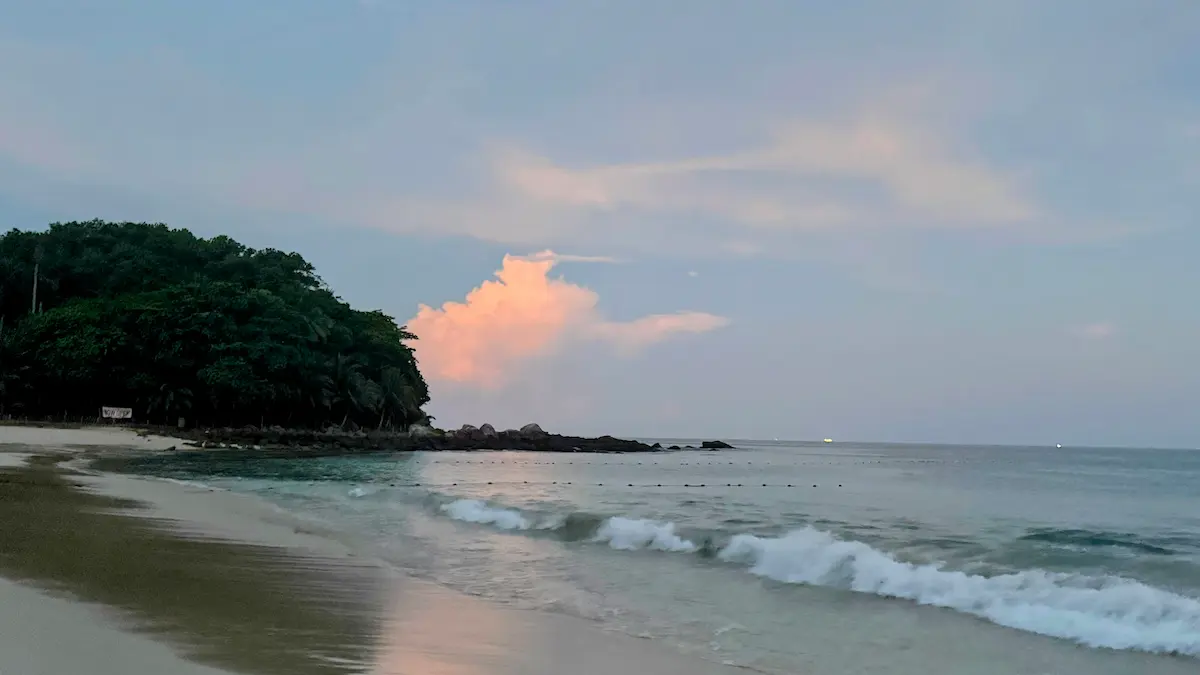
I remember going to Freedom Beach one morning to photograph the early light on the water. Technically it is on the wrong side of the island for a true sunrise shoot, but I arrived before dawn anyway hoping to catch the softer morning colours before the heat and boats arrived later in the day. There was not another person on the beach when I arrived. The bay was completely still, and for a while I found myself putting the camera down simply to enjoy the quietness and the shifting colours across the water.
Over time, photography has gradually trained me to notice quieter details in places like Patong that I probably would have ignored years earlier.
That morning there was also a friendly dog wandering the beach. Every time I crouched low trying to frame a shot, he seemed convinced I was trying to play with him instead. He kept running over excitedly before circling back again while I tried unsuccessfully to work around him. When I eventually packed up and started climbing the steep path back toward the road, he walked with me the entire way to the top before casually turning around and heading back down to the beach as though he had simply finished accompanying me for part of the morning.

Moments like that stay with me far longer than most nights out ever do.
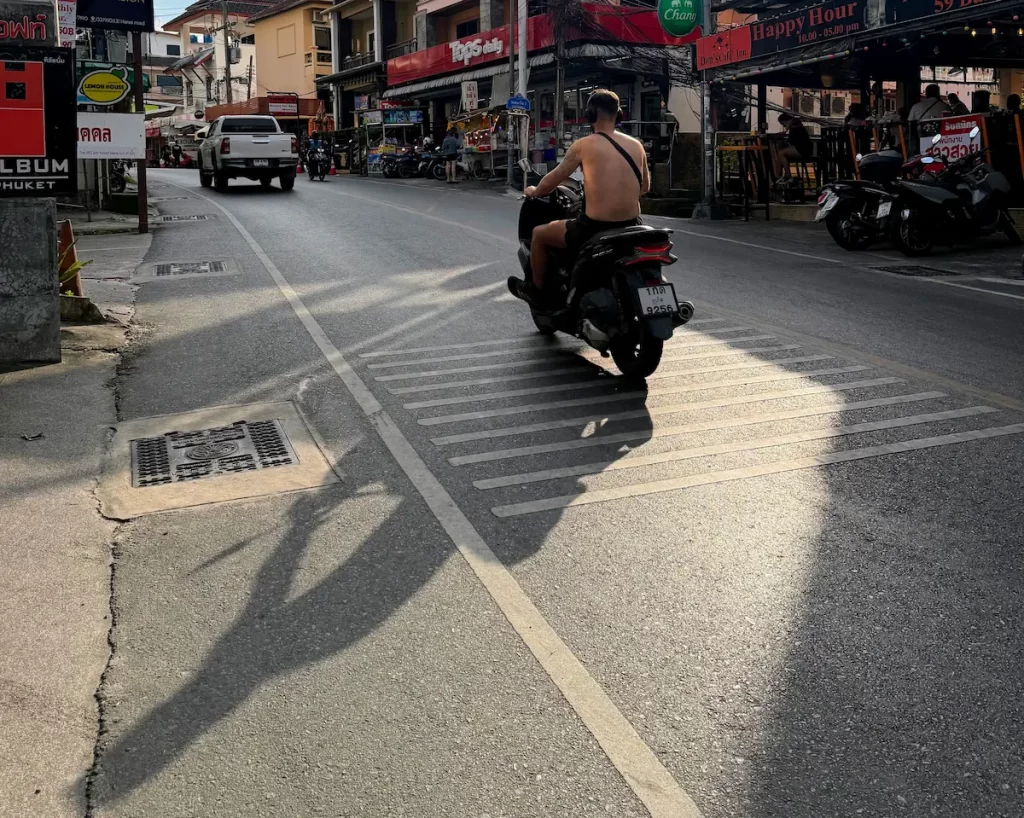
When I take photographs around Patong, I often find myself drifting into quieter sois away from the main roads. Almost every time I do, I discover something unexpected. Sometimes it is a bright flower growing stubbornly from a rough patch of broken ground. Sometimes it is children stopping their games for a few seconds to stare curiously at the foreigner standing still in the middle of their street trying to photograph light falling across a wall or tree.
Near where I live, there is an older couple who spend most mornings selling fried bananas from a small roadside setup. They arrive early and usually stay until around lunchtime, serving mostly locals with the occasional tourist stopping briefly as they pass. The first few times I walked by and said hello, they seemed slightly shy and uncertain around me. Over time, without many words ever being exchanged, those small greetings slowly became familiar. Now whenever I pass, there is always a wholehearted smile and acknowledgment between us before we both continue on with our mornings again.
None of these moments are extraordinary on their own. That is partly why I value them.
The beauty I see in Patong now is rarely found in the obvious places people advertise online. It exists in routine, atmosphere, familiarity, and small human interactions that quietly repeat themselves every day beneath the movement of tourism.
Patong Depends on What You Are Looking For
I think places like Patong Beach often reveal different versions of themselves depending on what people arrive there searching for in the first place.
For some visitors, Patong becomes exactly what they expected it to be. A place of nightlife, noise, distraction, movement, and temporary escape from ordinary life. There is nothing inherently wrong with that experience. The town was built around tourism for a reason, and part of Patong’s identity has always been its ability to offer people freedom from routine, even if only for a short time.
But I also think many people move through Patong so quickly that they never give the place enough time to reveal anything deeper than its surface energy.
The longer I have spent here, the less interested I have become in the obvious parts of the town and the more I have started noticing the quieter rhythms underneath them. The atmosphere early in the morning before the heat arrives. The sound of rain moving across the hills during low season. The familiarity of passing the same local vendors every day. Small human interactions that slowly become part of ordinary routine without ever feeling particularly important at the time.
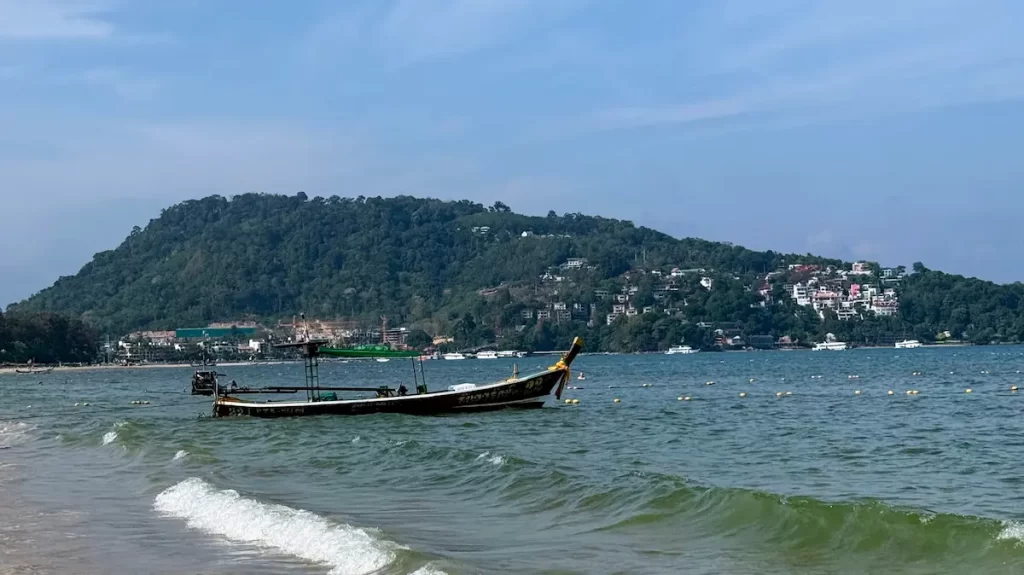
Patong can feel exhausting one moment and strangely peaceful the next. It can feel superficial and deeply human within the same afternoon. A crowded nightlife street only a few minutes away from complete stillness beside the sea. That contradiction is part of what makes the town difficult to define properly. Most online descriptions reduce Patong into something very one-dimensional, but places filled with this many temporary lives and overlapping ambitions are rarely as simple as they first appear.
I do not think Patong itself changed as much as my relationship with it changed.
When people first arrive somewhere, they often focus on what stands out the most loudly. Over time, attention shifts toward smaller details instead. Familiar faces. Patterns. Light. Atmosphere. Routine. The things that exist quietly in the background while most people rush past them toward something else.
That is the version of Patong I have gradually become attached to.
Not because the nightlife disappeared or the tourism slowed down, but because I eventually realised those things were only one layer of a much more complicated place.
The beauty, though maybe not the seclusion, is still there.
FAQ Patong Beach
Is Patong Beach only known for nightlife?
No. While nightlife is one of the most visible parts of Patong Beach, the area also has quieter beaches, local communities, hillside roads, markets, cafés, and a slower rhythm that many visitors never experience during short stays.
What is Patong Beach like during the daytime?
During the day, Patong feels very different from its nighttime atmosphere. Early mornings are often calm and peaceful, especially around beach road and quieter side streets before tourism activity fully builds again.
Why do some people enjoy Patong beyond nightlife?
Many long-term visitors and residents become attached to Patong because of its atmosphere, human energy, convenience, and the small daily routines that develop over time. Beneath the tourism, there is also a strong sense of movement, temporary community, and ordinary life.
Was Patong always a nightlife destination?
No. Before large-scale tourism development, Patong was known primarily for its beach, tropical scenery, and relatively secluded location compared to today. The nightlife industry expanded gradually as tourism increased over time.
Is Patong Beach still beautiful?
Despite heavy tourism development, many people still find beauty in Patong through its coastline, surrounding hills, tropical atmosphere, low-season moods, and quieter moments away from the busiest nightlife areas.
About the Author
David Hibbins is a travel writer, photographer, and digital publisher based in Phuket, Thailand. Through years of living, photographing, and observing life around Phuket, his work has become increasingly focused on the quieter human atmosphere that exists beneath heavily commercialised travel destinations.
Rather than approaching places simply as tourist attractions, David writes about the rhythm, movement, and emotional character that shape destinations over time. His work often explores the contrast between tourism and everyday life, focusing on the smaller details and human interactions many travellers move past too quickly.
His photography and writing across Thailand and Southeast Asia centre around observation, atmosphere, visual storytelling, and the lived experience of place. Much of his work reflects a long-term interest in how destinations feel beneath their surface identity, particularly in places shaped heavily by tourism, transition, and temporary movement.
David is also the founder of Go Find Asia, a travel publishing platform focused on Phuket and Southeast Asia, and Reflections Photography, a project exploring photography, observation, and visual storytelling through a creator-focused lens.